Loose Lab-Grown Diamonds
Loose lab-grown diamonds supplied against your programme: sorted by carat, colour, clarity and shape, cut to excellent standard, and certified by IGI, GIA, NGIC or NGTC. Melee sits in the 0.80–3.00mm range (typically HPHT); 0.10–6.00 ct stones come as both CVD and HPHT.
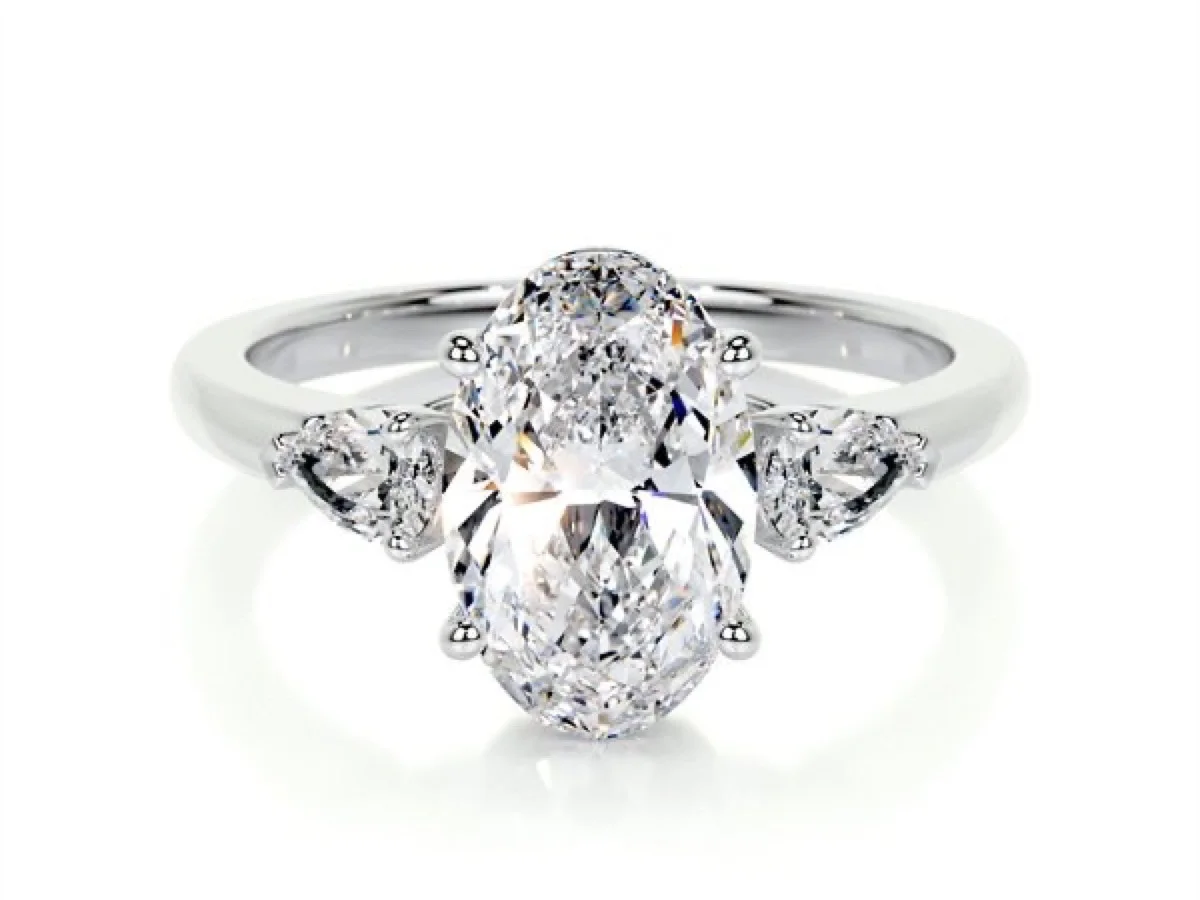
Wholesale lab-grown diamond specification
| Carat weight | 0.10 ct – 6.00 ct (larger by request) |
|---|---|
| Colour | D · E · F · G · H · I · J — plus fancy yellow, pink and blue |
| Clarity | VVS1 · VVS2 · VS1 · VS2 · SI1 · SI2 |
| Cut | Excellent |
| Certification | IGI · GIA · NGIC · NGTC |
| Melee (0.80–3.00mm) | Usually HPHT |
| 0.10–6.00 ct | CVD and HPHT |
| Shapes | Round brilliant · oval · pear · emerald · cushion · radiant · princess · marquise · asscher · heart |
How we sort the inventory
Melee — 0.80 to 3.00 mm
Calibrated melee for pavé, halo and tennis work. Usually HPHT-grown, matched for colour and cut before it reaches the setting bench.
0.10 – 1.00 ct
The working range for accent stones and accessible centre stones. Available as both CVD and HPHT.
1.00 – 3.00 ct
Core bridal centre-stone range across all standard shapes, certified per stone.
3.00 – 6.00 ct
Statement centres. Larger stones sourced to order against your specification.
Fancy shapes
Oval, pear, emerald, radiant, cushion, marquise, princess, asscher and heart.
Fancy colours
Yellow, pink and blue lab-grown diamonds for coloured-centre programmes.
What to know before you specify
What lab-grown diamonds actually are
A lab-grown diamond is a diamond produced by a controlled process rather than by geological process. It is not an imitation: it is pure carbon crystallised in the same isotropic 3D structure as mined diamond, with identical chemical, optical and physical properties. The two common production methods are HPHT (high-pressure high-temperature) and CVD (chemical vapour deposition), and the growth method is the only meaningful difference between a lab-grown stone and a mined one.
A short history your customers may ask about
1950s — synthetic diamond arrives via HPHT, made for industrial uses such as abrasives and laser optics. 1970s — GE researchers produce the first gem-quality synthetic diamonds, clear enough and large enough for jewellery. Mid-1980s — commercial-scale gem-quality production begins, initially small and yellow or brown. 2000s — CVD arrives, requiring lower pressure and temperature than HPHT. Mid-2010s — colourless lab-grown diamonds reach commercial scale, with HPHT and CVD remaining the two main methods.
How they are graded
Lab-grown diamonds are graded on the same 4Cs standard as mined diamonds — cut, colour, clarity and carat — but the laboratory issues a lab-grown diamond report that states the growth method. This differs from moissanite, which is graded on colour alone with reference to the diamond scale.
How they are identified
To the naked eye, lab-grown and mined diamonds look identical, because materially they are. Identification happens in a gemmological laboratory using specialised instruments that detect trace elements and small differences in crystal growth. This is precisely why disclosure discipline through the chain matters more than any visual check your staff could perform.
Why buyers choose them
Price per carat is the headline: the same retail price point supports a visibly larger centre stone, which changes what converts. Beyond price, the supply chain is shorter — fewer hands between growth and setting — and the environmental and labour concerns attached to mining do not apply. Growing a diamond also consumes less energy than extracting one.
Every centre stone verifiable
Stones ship with IGI or GIA reports under your program — check any report number against the issuing lab's own database before you accept the shipment.