Factory Tour
See the floor — in person or on a live video call, usually within the week.
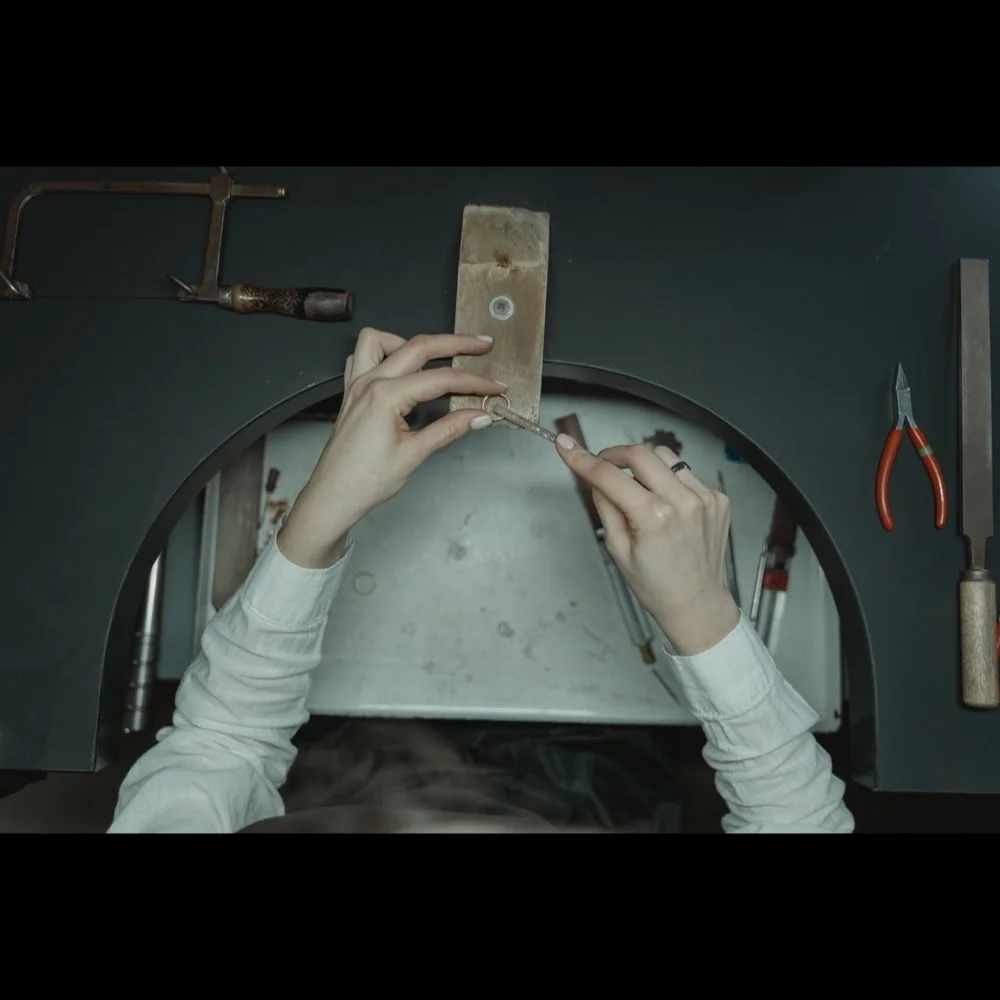
We host factory visits and live video walkthroughs of the production floor. Casting, stone setting, polishing and quality control run as separate stations with people at them, and you can see the actual line your order will run on.
We suggest a live video call rather than a photo pack, and we suggest it early. Photographs circulate between suppliers; a camera pointed at a casting line on request does not. Any manufacturer reluctant to do it has told you something important.
How factory tour actually works here
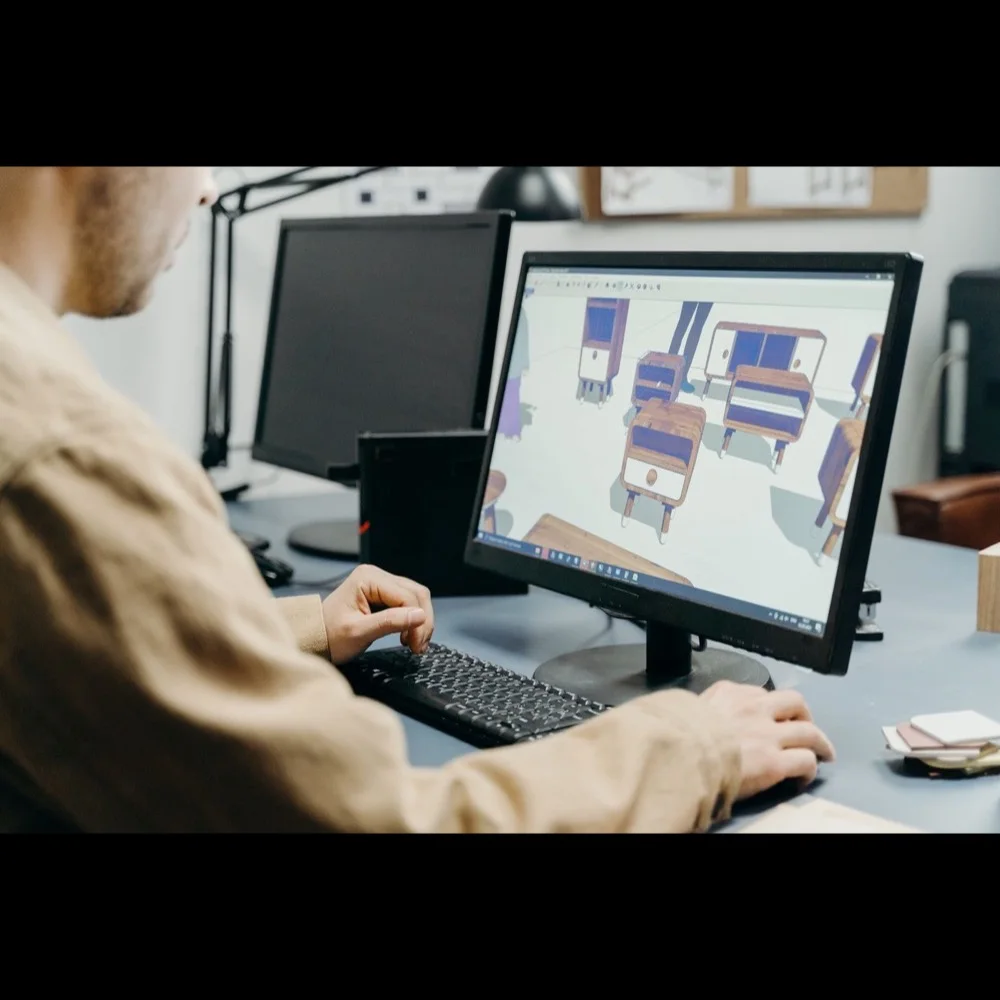
Station 1 — Design & CAD
Where a reference becomes a buildable object. Ten designers and CAD engineers work in 3D modelling software; on the tour you will see live models on screen and can ask to see the file of a piece similar to yours. This is also where manufacturability gets decided — stone seat depth, prong coverage, wall thickness at the thinnest point.
Station 2 — Wax printing & prototyping
Approved CAD models are printed in castable resin. Holding a resin prototype tells you more about proportion in ten seconds than a rendering does in ten minutes, which is why we print before we cast rather than after.
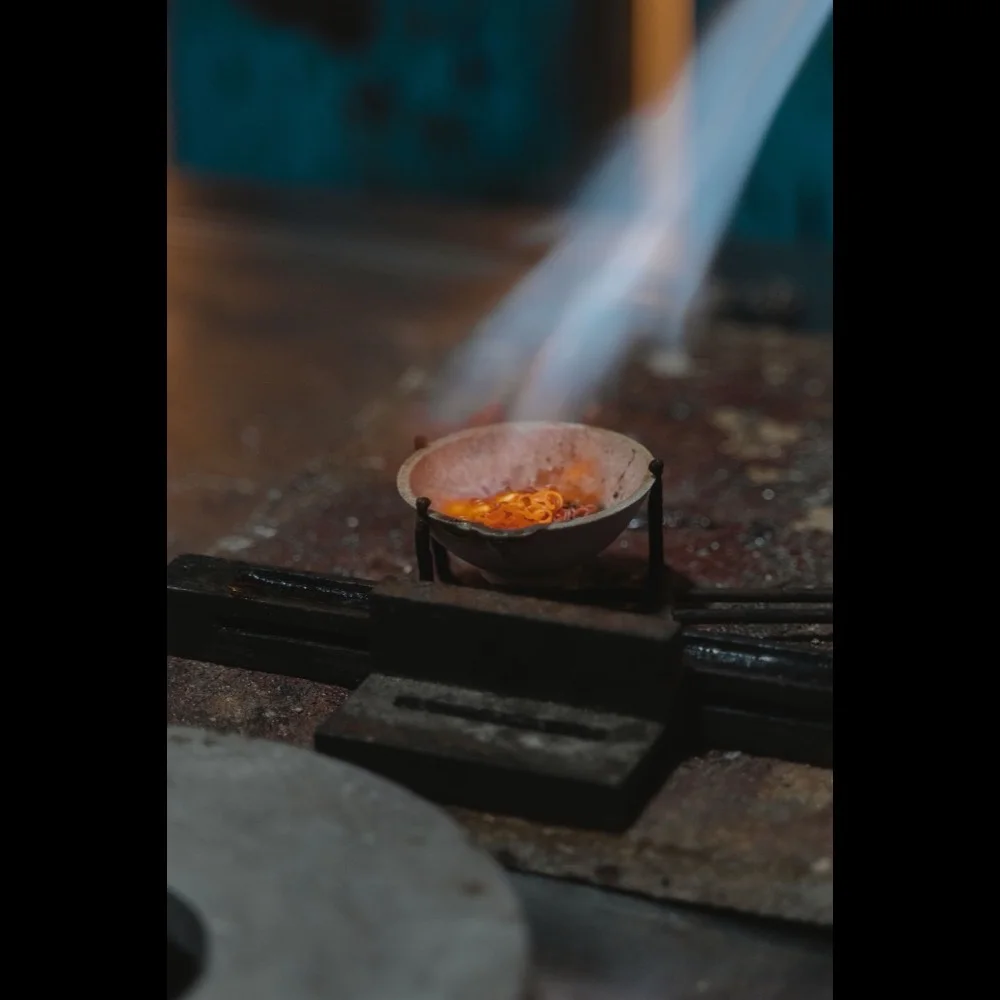
Station 3 — Lost-wax casting
Gold (9K, 10K, 14K/Au585, 18K/Au750), platinum (Pt950) and 925 sterling silver cast through the lost-wax process. Casting quality decides porosity, and porosity decides how a piece polishes and how long it survives wear. It is the least visible station on the tour and the one that determines the most.
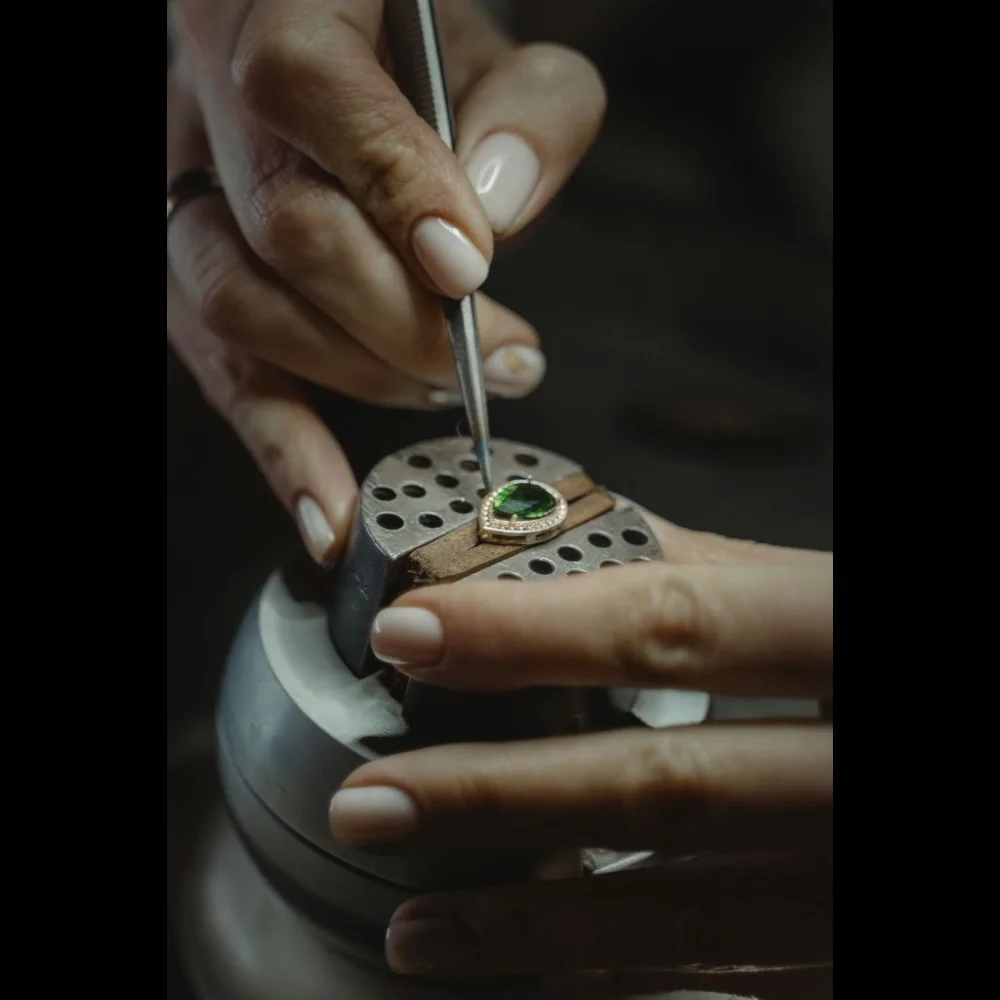
Station 4 — Stone setting benches
Prong, bezel, pavé, channel and bar setting, worked by dedicated setters — a setter who sets all day is a better setter than one who also polishes. Melee is calibrated and matched before it reaches the bench so a pavé line reads as one continuous surface. Ask to watch a setter work; it is the most revealing five minutes of any factory visit.
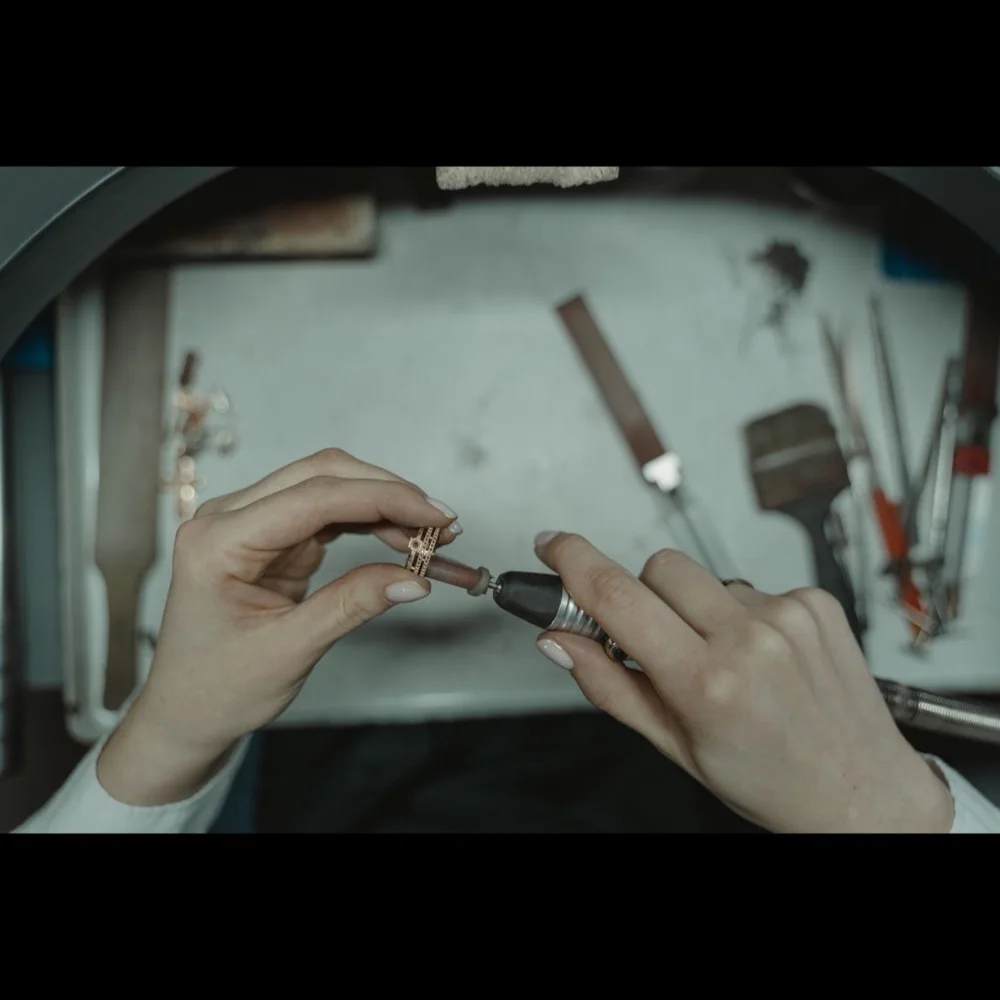
Station 5 — Polishing & plating
Hand and machine polishing to specified finish — high polish, matte, brushed or hammered — then plating from 0.03μm to 2.5μm depending on your specification. Thicker plating costs more and lasts longer; we will tell you honestly which your price point supports rather than quietly using the thinnest that passes.
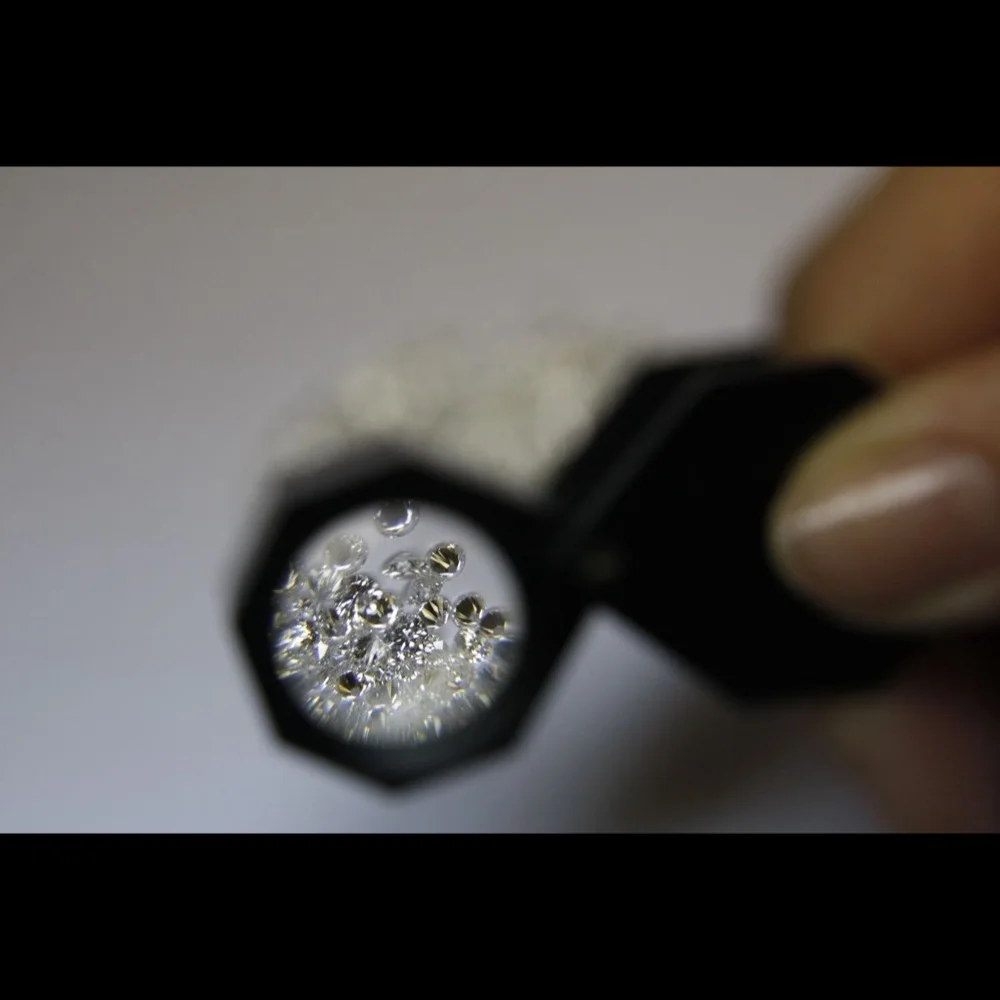
Station 6 — Quality inspection
Five-stage inspection runs through production, not only at the end: material inspection, casting inspection, stone setting inspection, polishing inspection, and final product inspection. On the tour you can stand at the final bench and watch pieces measured against the approved pre-production sample.
Station 7 — Documentation & dispatch
Every order is photographed and filmed under standard lighting before packing, with stone report numbers recorded on the packing documentation. This is where remote approval stops being a leap of faith.
How to book a live video walkthrough
Scheduled to your time zone, usually within the week. You direct the camera — ask for a specific station, an order in progress, or the QC bench mid-inspection. Bring your quality manager and ask technical questions; those are the ones worth answering. We suggest video over a photo pack for a simple reason: photographs circulate between suppliers, a live camera does not.
In-person visits and third-party inspection
Arranged by appointment — tell us your dates if you are already sourcing in the region. Bring a physical sample of the standard you expect and we will discuss it at the bench with the people who would build it. If your compliance process requires an independent auditor or inspection agency, arrange it at your cost and we will schedule floor access.
What the line looks like
See it rather than read about it
Book a live video walkthrough of the floor — usually available within the week, directed by you.
Book a Factory TourDesign & CAD
10 in-house designers and CAD engineers turning references and briefs into production-ready models.
Production & Capacity
20,000–30,000 pieces monthly across dual factory lines, worked by 50 craftsmen.
Quality Control & Testing
Certified stones, piece-level inspection, and photo/video documentation before dispatch.
Sustainability & Responsible Sourcing
Lab-grown programmes and documented sourcing, stated plainly rather than green-washed.